
Cookies help us deliver our services. By using our services, you agree to our use of cookies.
Kevlar Sheets

Sort by
Display per page
| ||||||||||||||
| ||||||||||||||
| ||||||||||||||
| ||||||||||||||
| ||||||||||||||
| ||||||||||||||
| ||||||||||||||
| ||||||||||||||
| ||||||||||||||
| ||||||||||||||
| ||||||||||||||
| ||||||||||||||
| ||||||||||||||
| ||||||||||||||
| ||||||||||||||
Kevlar & Carbon/Kevlar Sheets — Buyer's Guide
Choosing a Kevlar Sheet
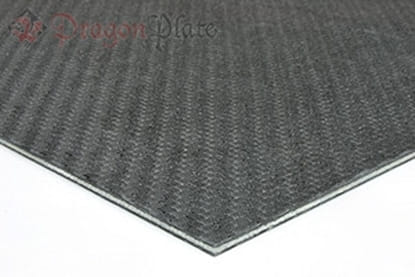
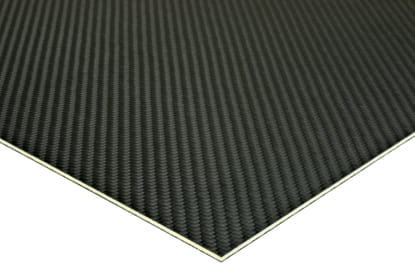
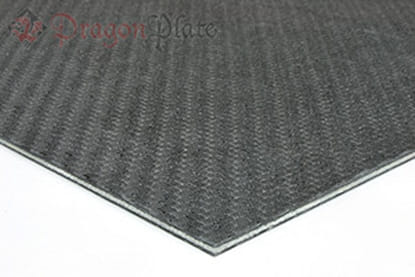
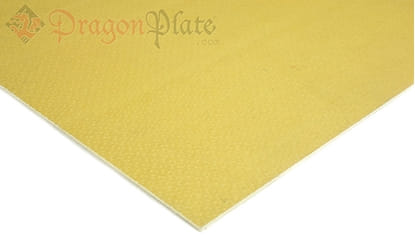
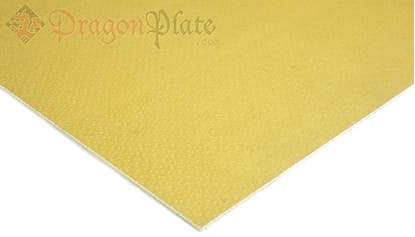
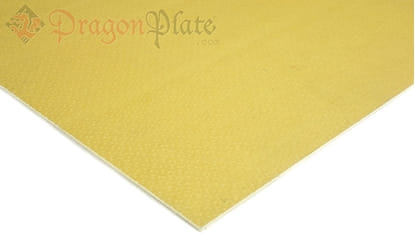
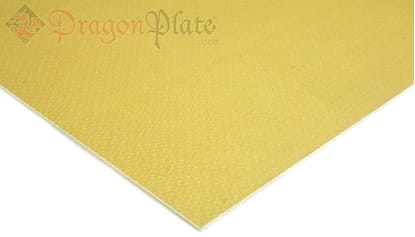
DragonPlate® offers three distinct constructions built around Kevlar, each solving a different version of the same problem: carbon fiber is stiff but brittle under impact, and Kevlar is tough but not as rigid. The construction you choose determines where on that spectrum your panel lands. Solid Carbon/Kevlar Hybrid sheets weave both fibers together through the full thickness for a balance of the two properties. Kevlar Core sheets sandwich an all-Kevlar core between carbon fiber skins, holding onto nearly all of solid carbon fiber's stiffness while gaining Kevlar's puncture and fracture toughness. Solid Kevlar sheets are all-Kevlar, all the way through — the toughest, least rigid, and most impact-resistant of the three. Each construction is also available in a standard epoxy version and a prepreg version; the prepreg lines carry a higher service temperature and tighter fiber-volume control at a cost and lead-time premium.
Which Kevlar sheet type should I choose?
| Sheet type | Construction / ply orientation | Max temp | Stocked sizes | Stocked thicknesses | Choose it when… |
|---|---|---|---|---|---|
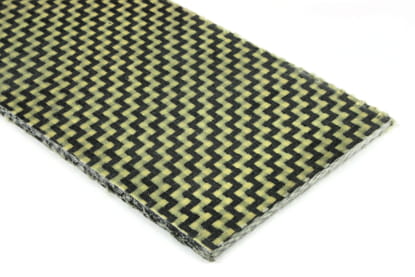
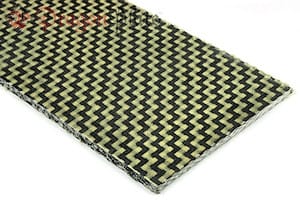
| Carbon/Kevlar Hybrid | Solid hybrid weave, carbon and Kevlar through full thickness | 140°F | 24"×48"" | 1/16"", 1/8"" | Both stiffness and toughness material matter and need to be optimized together. |
| Carbon/Kevlar Hybrid Veneer (colored) | Twill weave Kevlar/carbon veneer, decorative | 140°F | 24"×24" up to 48"×96" | Veneer gauge (0.018"–0.021") | The application needs the Kevlar/carbon aesthetic — colored twill in blue, red, or yellow — as a surface finish rather than a structural laminate; adhesive-backed option available |
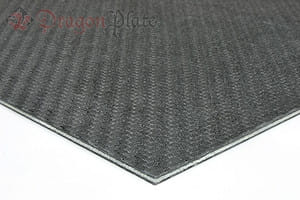
| Kevlar Core (sandwich) | Carbon fiber skins over an all-Kevlar core | 140°F | 24"×48", 48"×48", 48"×96" | 1/16", 1/8" (thicker cores by quote) | Near-solid-carbon-fiber stiffness is required, but the panel also needs meaningfully better impact and puncture resistance than an all-carbon laminate |
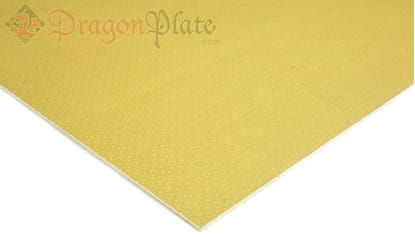
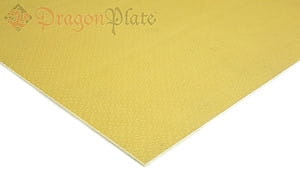
| Solid Kevlar | All 0/90 woven Kevlar laminate | 140°F | 24"×48", 48"×48", 48"×96" (up to 4'×8' by quote) | 1/16", 1/8" (up to 1/4" by quote) | Toughness and impact resistance are the priority over rigidity — protective panels and high-impact applications where flex is acceptable. Not rated for ballistic use |
| Solid Kevlar Prepreg | All-Kevlar prepreg construction | 250°F | 24"×24", 24"×36" | 1/16", 1/8" | Solid Kevlar's toughness is needed alongside a higher service temperature or tighter resin-content control than the standard epoxy line provides |
| Kevlar Core Prepreg | Carbon-skin/Kevlar-core sandwich, prepreg construction | 250°F | 24"×24", 24"×36" | 1/8" | The Kevlar-core sandwich's stiffness-plus-toughness profile is needed in an elevated-temperature environment |
Rules to hold to: none of DragonPlate®'s Kevlar sheet products — solid, core, or hybrid — are rated for ballistic or armor applications. The user is responsible for testing and certifying any product for a specific application requirement, including impact or ballistic performance claims.
Frequently asked selection questions
What's actually different between the Carbon/Kevlar Hybrid sheet and the Kevlar Core sheet?
The hybrid sheet weaves carbon and Kevlar fiber together through the entire thickness of the laminate, producing a single material with blended properties — tougher than solid carbon fiber, stiffer than solid Kevlar, but not matching either material at its own strength. The Kevlar Core sheet is a sandwich construction instead: carbon fiber skins carry the bending stiffness (nearly matching a solid carbon fiber sheet), while an all-Kevlar core between those skins absorbs impact and resists puncture. If the priority is staying as close as possible to solid-carbon-fiber stiffness while adding toughness, the Kevlar Core sandwich is the more targeted choice. If the application calls for a single homogeneous laminate with blended properties throughout — including at a cut edge — the hybrid sheet is the better fit.
When do I need Solid Kevlar instead of one of the hybrid or core options?
When toughness and impact resistance are the dominant requirement and reduced stiffness is an acceptable tradeoff. Solid Kevlar sheets are built from an all 0/90 woven Kevlar laminate — significantly tougher under impact than carbon fiber, but less rigid, and more difficult to machine. They are not rated for ballistic applications; any impact-resistance claim beyond general toughness requires independent testing and certification by the user for their specific application.
Are Kevlar sheets harder to cut and machine than carbon fiber sheets?
Yes, across all three constructions. Kevlar's toughness — the same property that gives it impact resistance — also makes it more resistant to clean cutting than carbon fiber. Standard carbide or diamond-grit tooling still applies, but expect more tool wear and a slower feed rate than with a comparable carbon fiber sheet, and back the cut with sacrificial support to control fraying at the edge.
Do I need the prepreg version or the standard version?
Choose prepreg when the application needs a higher service temperature — the prepreg Kevlar and Kevlar-core lines are rated to 250°F versus 140°F for the standard epoxy constructions — or when tighter, more consistent fiber-volume control matters more than cost and stock-size flexibility. The prepreg lines are currently offered in a narrower range of stock sizes (24"×24" and 24"×36") than the standard epoxy lines; larger prepreg panels are available by custom quote.
Can I get a custom thickness or a thicker Kevlar core?
Yes. Solid Kevlar sheets are available up to 4'×8' and 1/4" thick by quote, and Kevlar Core sheets can be built with thicker cores or custom skin thicknesses. Contact DragonPlate® for a custom quote in either case — both fall outside the standard stocked sizes shown above.
What finish options are available on the colored Kevlar/carbon veneer?
The twill-weave Kevlar/carbon veneer is available in blue, red, or yellow (paired with black), in gloss or matte finish, with or without an adhesive backing. This is a decorative surface veneer rather than a structural laminate — for structural toughness plus a Kevlar/carbon look through the full thickness, specify the solid hybrid sheet instead.
Sizes, Customization & Ordering
What is the largest sheet available?
Standard stocked Kevlar and Kevlar-hybrid sheets run up to 48"×96". Solid Kevlar sheets can be custom-ordered up to 4'×8' with thicknesses up to 1/4"; Kevlar Core sheets are available with custom core thickness and skin thickness by quote.
Do you offer CNC cutting and custom fabrication?
Yes. CNC cutting, custom sheet sizes, and specialized laminate schedules are available through Element 6 Composites for all three Kevlar constructions. Contact DragonPlate® for a quote — custom Kevlar work typically carries a longer lead time than standard carbon fiber sheet customization given the material's toughness.
Ordering basics
The listed price covers the sheet itself — shipping, taxes, and handling are calculated separately at checkout. Payment is prepaid by credit card, check, or wire; approved buyers may qualify for Net 30 terms. Bulk pricing is available by quote for larger orders.
Working with Kevlar Sheets
What adhesive should I use to bond Kevlar sheets?
The same structural adhesives recommended for DragonPlate®'s carbon fiber sheets apply — 3M Scotch-Weld epoxies (2216 B/A, DP420, DP460NS, and others) and LOCTITE EA-series epoxies. Lightly sand the bonding surface before adhesive application, as with any DragonPlate® laminate.
Are there limitations to know before I buy?
None of DragonPlate®'s Kevlar, Kevlar-hybrid, or Kevlar-core sheet products are rated for ballistic or armor applications — the user is responsible for testing and certifying suitability for any specific application, including impact-resistance claims. Standard epoxy constructions are rated to 140°F; only the prepreg Kevlar and Kevlar-core lines reach 250°F. As with carbon fiber sheet stock, these laminates are not thermoformable.
Company & Quality
Are DragonPlate® Kevlar sheets made in the USA?
Yes. DragonPlate® is a brand of Allred & Associates Inc., manufactured at the company's ISO 9001:2015-certified facility in Elbridge, New York. DragonPlate® uses first-quality materials only, never off-spec.
Support: 315-252-2559 (Mon–Fri, 8:30am–5:00pm ET) · service@dragonplate.com · Contact Us
Product Categories
Filter Products:
Price range
Finish
Adhesive Backing
Length
Width
Thickness
Outer Weave
Sheet Size
Sheet Thickness
Color
Core Material
Ply Orientation
Max Temperature
Fiber Modulus
Composition